
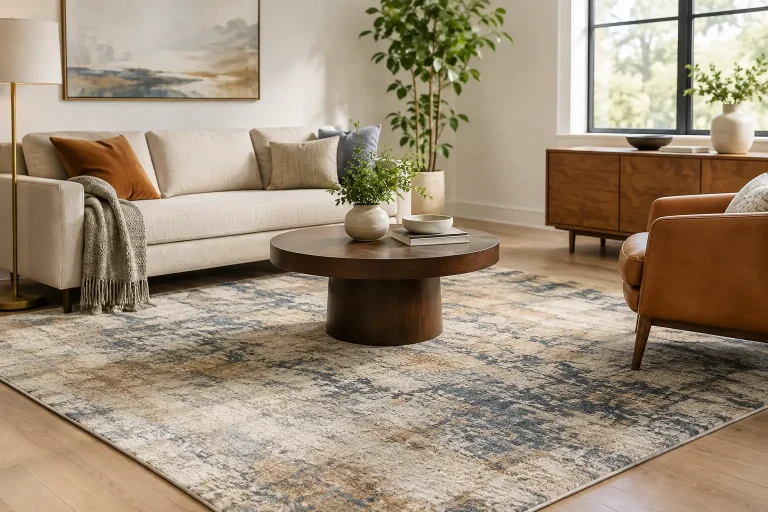
Designer Rugs for Modern Homes That Last
Designer rugs for modern homes bring warmth, acoustic ease, and visual order. Learn how to choose material, scale, and color with lasting clarity at home.
A bedroom becomes Japandi not through a collection of pale wood objects, but through edited choices that make rest feel considered. The strongest Japandi bedroom furniture ideas bring Japanese calm and Scandinavian practicality into balance: low visual noise, honest materials, generous negative space, and furniture that earns its place over decades.
For a primary bedroom, this is less a decorative theme than a framework for choosing well. Each piece should have clarity of purpose, satisfying proportions, and a material presence that improves the room rather than filling it.
The bed sets the visual pace of a Japandi bedroom. Look for a frame with a low, horizontal profile, clean joinery, and a headboard that feels integrated rather than applied. Solid oak, ash, or walnut brings the warmth needed to prevent minimalism from feeling austere, while a gently rounded edge or softened corner introduces the human quality central to both design traditions.
A platform bed is often a natural choice, particularly where ceiling height is limited or the room needs a more grounded presence. That said, low is not automatically better. A slightly raised bed can feel more comfortable for daily use and may suit those who prefer easier access, provided its base remains visually light. The right decision depends on the room’s scale, window height, and the people using it.
Choose a headboard with restraint. Timber slats, a single broad plane of wood, or tailored upholstery in wool, linen, or bouclé can work beautifully. Avoid overly dramatic tufting or heavily sculpted forms that interrupt the composed, architectural quality of the scheme.
Japandi succeeds when materials are calm but not monotonous. Pale oak against warm off-white walls is a familiar starting point, yet a more nuanced room layers grain, texture, and tonal depth. Think oiled wood beside nubby wool, matte ceramic beside linen, and paper-like shades against a darker timber bedside table.
Wood should feel authentic, not merely decorative. Natural variation in grain, small knots, and a tactile finish give the bedroom depth without relying on ornament. Lighter woods create an airy, softened effect, while walnut or smoked oak can anchor a larger room with greater visual richness. In compact condominiums, using one dominant wood tone across the bed, nightstands, and storage often makes the room feel more coherent.
There is no requirement for every timber to match precisely. In fact, a room can feel more collected when oak, walnut, and woven natural fibers appear in measured combinations. The discipline lies in keeping undertones compatible. A yellow-toned oak beside a strongly red-stained wood can feel accidental; a neutral oak with walnut generally reads as intentional.
Instead of adding multiple decorative accessories, introduce texture through pieces with daily purpose. A wool rug that extends beyond the bed softens the first step of the morning. Linen bedding relaxes the geometry of a timber frame. A hand-finished ceramic lamp base or a woven bench at the foot of the bed provides contrast without adding clutter.
In Singapore’s humidity, material choices also deserve practical consideration. Select well-crafted wood furniture with finishes appropriate to everyday indoor living, and avoid placing timber directly against persistently damp walls or beneath aggressive sun exposure. Natural materials age gracefully when given sensible care and a stable setting.
Nightstands are small pieces with an outsized effect on a bedroom’s composition. Their height should sit close to the top of the mattress, ideally allowing a glass of water or reading lamp to be reached without visual or physical awkwardness. Width matters too. A very narrow table can look insubstantial beside a generous upholstered bed, while oversized storage cabinets can make a smaller room feel compressed.
Matching nightstands offer the clearest expression of order, especially in a formal primary bedroom. Yet symmetry is not a rule. A compact drawer unit on one side and a lighter table on the other can work if the overall visual weight remains balanced. This is particularly useful when one side of the bed must accommodate a window, wardrobe, or circulation path.
Favor designs with one or two useful storage zones over complicated compartments. A drawer for personal items and an open shelf for a book is often enough. The goal is to support an uncluttered bedside surface, not to introduce another piece of cabinetry with too many visual lines.
Storage is where a Japandi room either holds its calm or loses it. The ideal wardrobe, chest, or sideboard does not demand attention, but its proportions and craftsmanship should reward a closer look. Flat-fronted cabinetry, recessed pulls, slender handles, and carefully aligned doors preserve clarity of form.
For bedrooms with limited floor area, a tall wardrobe can be more successful than several lower storage pieces. It concentrates volume in one architectural gesture and leaves more open space around the bed. Where a wall allows, a long, low cabinet can provide folded-clothes storage while acting as a quiet display surface for a single vessel, framed artwork, or reading light.
Do not assume that concealed storage is the only answer. An open rail, a beautifully made valet stand, or a minimal bench may be useful for frequently worn garments, but only if it prevents clothing from accumulating elsewhere. In this style, open storage must look deliberate even on an ordinary weekday.
A bedroom bench offers another considered layer. Choose one in solid wood, woven cord, or restrained upholstery, and ensure there is adequate clearance around it. In a compact room, a bench that blocks the route to the wardrobe is more hindrance than luxury.
Japandi interiors depend on shadows as much as surfaces. Overhead lighting alone tends to flatten a bedroom, so add low-level illumination that creates a more intimate evening atmosphere. Wall-mounted reading lights keep nightstands clear, while table lamps bring a sense of domestic warmth and make the bed feel anchored.
Look for shades in fabric, frosted glass, paper, or softly diffused metal. The fixture should be sculptural enough to register during the day but quiet enough not to compete with the furniture. A pendant beside the bed can be elegant in a larger room, though it requires careful positioning. If hung too low or too close to a headboard, it can feel intrusive rather than serene.
Warm lighting is usually the more forgiving choice for wood, natural textiles, and muted paint colors. It reveals texture and creates the gentle tonal transitions that make a minimal bedroom feel inviting rather than sparse.
A Japandi palette is often described as neutral, but neutral need not mean blank. Start with warm whites, mushroom, stone, soft gray, charcoal, or earth-based beige, then let wood provide the room’s principal warmth. Add depth through one darker note: a blackened timber stool, an ink-toned throw, a deep green ceramic object, or bronze hardware.
The key is containment. If the room has a walnut bed and charcoal wall color, keep the surrounding furniture quieter. If the architecture is exceptionally pale, a darker lounge chair or bench can bring needed weight. Contrast should establish a focal point, not become a collection of competing statements.
Artwork deserves the same discipline. One substantial print, a quiet abstract, or a small work with generous matting is usually more effective than a gallery wall. Leave some walls intentionally open. Empty space is not unfinished space; it is what allows proportion, craftsmanship, and natural light to be felt.
The most persuasive Japandi bedrooms are not assembled all at once. Begin with the bed, then choose the storage and lighting needed for how you actually live. A finely made timber bed or nightstand has the capacity to move with you from one home to the next, and its relevance does not depend on a passing finish or seasonal color.
When assessing furniture, look beyond the first impression. Examine how a drawer closes, whether the edges are resolved with care, how the legs meet the frame, and whether the piece remains composed from every angle. These details distinguish enduring European and Scandinavian design from furniture that simply borrows a visual language.
For homeowners considering a complete bedroom, Danish Design Co’s showroom can be useful for judging timber tone, upholstery texture, and scale in person. Photographs communicate silhouette; material integrity is best understood at close range.
A well-composed Japandi bedroom should feel increasingly right as life becomes busier: a room with fewer, better objects, each chosen for comfort, purpose, and the quiet pleasure of living with it every day.
Designer rugs for modern homes bring warmth, acoustic ease, and visual order. Learn how to choose material, scale, and color with lasting clarity at home.

A sofa bed for daily sleeping must feel considered by day and genuinely restorative at night. Learn what construction, mattress, and scale to prioritize.
Explore 20+ sofas, 30+ tables, and 50+ chairs in our 12,000 sq ft showroom, along with a wide selection of designer furniture. Experience quality firsthand and discover the stories behind each piece—it’s a visit truly worth your time.