
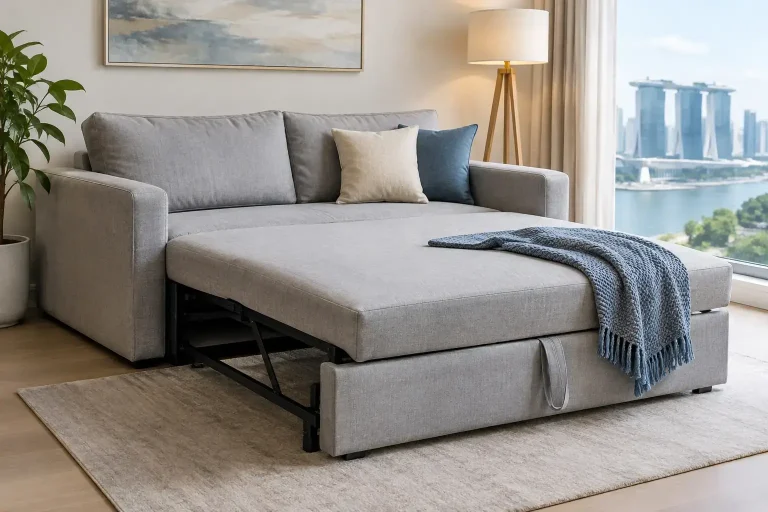
Sofa Beds in Singapore for Lasting Comfort
Sofa beds Singapore buyers can live with: learn how proportion, mattress comfort, mechanisms, and European craftsmanship shape a refined guest room daily.
A well-chosen sofa bed should not announce itself as a compromise. In a considered living room, it must read first as a composed, inviting sofa, then become a genuinely comfortable bed when guests stay over. This guide to designer sofa beds considers the details that determine whether a convertible piece belongs in a refined home for years, rather than merely solving an occasional space problem.
For Singapore apartments, guest rooms, studies, and compact secondary lounges, this distinction is especially relevant. Floor area is valuable, but visual calm is equally so. The right design protects both.
A designer sofa bed begins with the same priorities as any enduring piece of seating: clarity of form, honest materials, structural integrity, and proportion. Its sleeping function is integrated into the design rather than applied as an afterthought. The result is furniture that retains its visual poise when closed and its practical value when opened.
This is not simply a question of appearance. The internal mechanism, mattress construction, seat depth, and frame all influence how the sofa performs from one day to the next. A finely resolved model feels substantial when you sit, easy when you convert it, and reassuringly stable when it is used as a bed.
European-made Innovation Living sofa beds, available through Danish Design Co, are designed around this balance of everyday comfort and restrained Scandinavian expression. They carry a 5-year warranty, offering useful assurance for a piece that contains more moving parts than a conventional sofa.
The most common mistake is to select a sofa bed according to its open-bed dimensions alone. That measurement matters, but the piece will spend most of its life in sofa mode. Start by considering how it will hold the room.
A compact condominium living room may call for a clean-lined model with raised legs, allowing more of the floor to remain visible and keeping the setting light. In a larger family room, a deeper seat and more generous arms can create the relaxed presence expected of a primary sofa. A study that doubles as a guest room may favor a daybed-like silhouette, which feels appropriate for reading or working even when no one is staying overnight.
Then map the opening path. Measure the wall behind the sofa, the clearance in front, and the route through doors, elevators, and corridors. A sofa bed can fit neatly against a wall yet require substantial open floor space to convert. In a compact interior, that difference can decide whether the design feels effortless or disruptive.
Frequency changes the brief. If the bed will be used a few weekends each year, visual proportion and ease of conversion may lead the decision. If it will support regular overnight use by family, a visiting caregiver, or a long-term guest, mattress comfort and sleeping support deserve equal weight with the sofa’s appearance.
It also depends on who will use it. A low, lounge-like profile may be ideal for a media room but less convenient for an older guest getting in and out of bed. Conversely, a more upright model can suit a study or guest room while feeling too formal for a relaxed living space. Good selection is less about finding a universally perfect sofa bed than choosing the right character for a particular room and routine.
Comfort should be assessed separately in sofa mode and bed mode. A welcoming seat does not automatically produce a good night’s sleep, and a supportive mattress does not excuse an awkward sofa.
When seated, pay attention to the relationship between seat depth, seat height, back support, and arm position. A deeper seat invites lounging, while a shallower profile often supports more upright conversation. Cushion softness has its own trade-off: a plush surface can feel immediately luxurious, but well-calibrated support tends to remain more comfortable through a long evening.
When opened, the sleeping surface should feel even and properly supported. Test whether you can sense changes in level where sections meet, and consider the mattress thickness and composition in relation to expected use. A sofa bed for occasional guests can prioritize a streamlined profile. One intended for frequent sleeping should earn a more exacting test.
The conversion itself is part of comfort. A well-designed mechanism should operate with a clear, controlled movement, without requiring the room to be rearranged or cushions to be stored elsewhere. Visit the showroom and open the bed yourself. The small act of using the mechanism often reveals more than a product image ever can.
A sofa bed is asked to absorb more movement than a fixed sofa. This makes the quality of its construction particularly significant. Look for a frame that feels composed under weight, a mechanism that moves without unnecessary play, and upholstery that suits the level of use the room will receive.
Fabric selection is both visual and practical. A tightly woven textile can bring tailored definition to a minimalist room, while a more textured upholstery softens the geometry of a linear silhouette. Neutral tones offer long-term flexibility as rugs, lighting, and artwork evolve. Richer hues can be compelling when the sofa bed is intended as a deliberate focal point, though they ask for more confidence in the wider palette.
Pay attention to the legs and lower frame as well. Wood introduces warmth and tactility, especially in interiors with stone, glass, or polished surfaces. Metal can lend a lighter, more architectural expression. Neither is inherently superior. The important question is whether the material language relates naturally to the room’s existing furniture.
The strongest sofa beds do not look like temporary furniture. Their appeal lies in disciplined proportions: a back height that does not overwhelm the room, arms that neither crowd the seat nor disappear, and a base that gives the form visual balance.
Models such as the Malloy, CozyPad Sofa Bed with Arms, Mikunjo, and Killian offer distinct interpretations of this principle. The right choice may be a more enveloping form for a private lounge, or a lighter and more compact expression for a multipurpose room. Rather than choosing by photograph alone, compare how each model sits in space, where its visual weight falls, and how it relates to adjacent lounge chairs or coffee tables.
In a carefully furnished interior, cohesion matters more than matching every finish. A sofa bed can introduce a new texture or silhouette while still belonging to the same visual language. Nordic minimalism is not about reducing a room to sameness. It is about selecting each element with enough restraint that materials, proportion, and craftsmanship can be appreciated.
A showroom visit is valuable because sofa beds are tactile objects. Sit for longer than a few seconds. Lean into the back. Check the seat height against your natural posture. Convert the mechanism and lie down in the position your guests are likely to use. Notice whether the design feels calm and intuitive at each stage.
Bring room measurements, photographs, and, if possible, finish samples from nearby flooring or cabinetry. This makes it easier to assess whether an upholstery tone is quietly complementary or too close to an existing surface. For architects and interior designers, it is also an opportunity to consider the sofa bed in relation to circulation, lighting, and the wider material specification.
A designer sofa bed is most successful when it serves the room without making the room feel provisional. It provides a generous place to sit, a proper place to sleep, and a lasting expression of thoughtful design.
To continue the selection process, download the sofa bed catalogue or request it on WhatsApp, then test the models in person at the showroom at 100E Pasir Panjang Road, #06-03.
Sofa beds Singapore buyers can live with: learn how proportion, mattress comfort, mechanisms, and European craftsmanship shape a refined guest room daily.
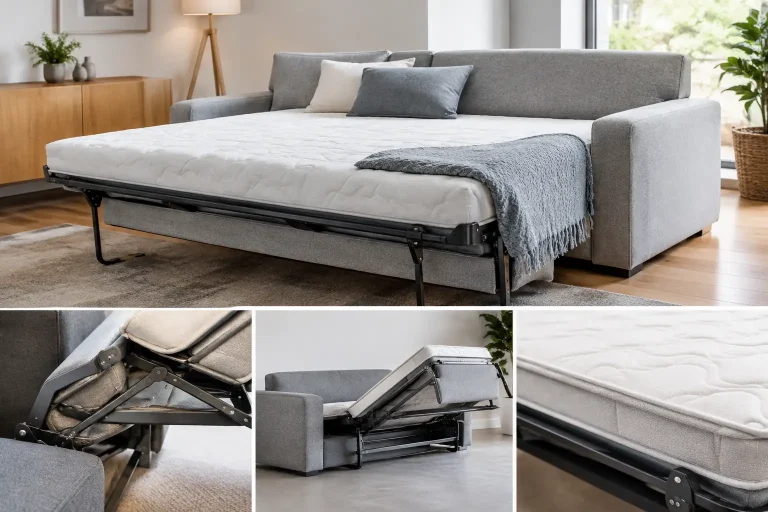
Learn how sofa bed mechanisms and comfort work together, from sleeping support to daily use, so you can select a refined guest bed for a considered home.
Explore 20+ sofas, 30+ tables, and 50+ chairs in our 12,000 sq ft showroom, along with a wide selection of designer furniture. Experience quality firsthand and discover the stories behind each piece—it’s a visit truly worth your time.