
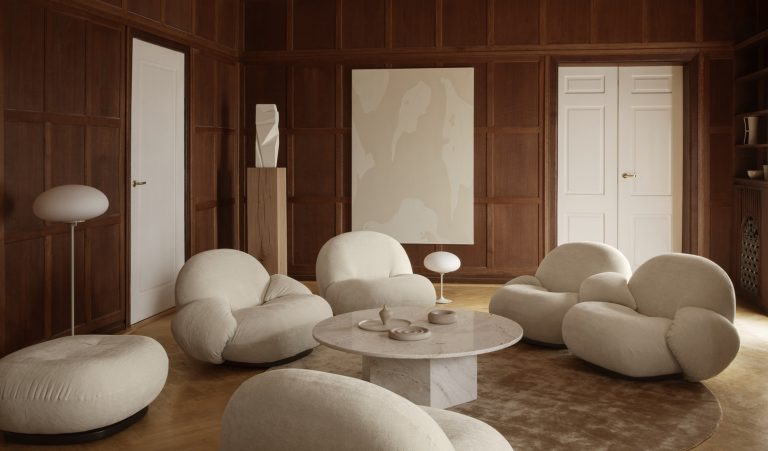
European Furniture Brands for Lasting Interiors
European furniture brands bring clarity of form, material integrity, and lasting comfort to homes designed for years of considered living and thoughtful daily use.
A well-composed workspace does more than accommodate a laptop and a stack of papers. Designer office furniture establishes the conditions for concentration: a desk with a calm visual presence, a chair that supports long hours without announcing itself, and storage that keeps the room ordered rather than overfilled. In a home where every room is considered, the study deserves the same attention to proportion, material, and permanence as the living room.
For professionals in Singapore, the home office is rarely a temporary arrangement. It may be the setting for private calls, client meetings, late-evening work, and quiet reading. The pieces chosen for it should therefore meet two standards at once: they must perform under daily use and belong naturally within the wider interior.
The most successful office interiors begin with an honest assessment of how the space is used. A writer, architect, executive, and entrepreneur may all need a desk, but their working patterns are different. One may need a broad, uninterrupted surface; another may prioritize reference storage, monitor placement, or the ability to meet across the desk without creating a barrier.
This distinction matters because designer office furniture is not defined solely by its appearance. Its value lies in the intelligence behind the form. A considered desk establishes a comfortable relationship between chair, screen, light, and reach. A well-made cabinet makes files and equipment accessible without allowing visual clutter to dominate the room.
Before selecting finishes, identify what must remain on the work surface each day. A laptop-only setup can support a lighter, more sculptural desk. Dual monitors, printed documents, and peripheral equipment require greater depth and more deliberate cable management. The aim is not to fill the room with office components, but to give every necessary element a clear place.
In a dedicated study, the desk often becomes the room’s strongest horizontal line. It should be selected with the same care given to a dining table: consider its scale from every angle, the quality of its material, and how it meets the floor and surrounding architecture.
Solid wood desks bring warmth and visual depth, particularly in interiors defined by stone, plaster, glass, or polished surfaces. Their character develops through use, making them especially suitable for a home intended to evolve over many years. Veneered surfaces can also be highly refined when the grain is carefully matched and the construction is exacting. What matters is not simply the species of timber, but the quality of the joinery, edge treatment, and finish.
A desk with slender legs may preserve a sense of openness in a condominium study, while a more substantial form can anchor a larger room or private executive office. Neither approach is inherently better. The decision depends on the available volume and the desired atmosphere. In a compact room, visual lightness is often valuable. In a generous space, a desk with architectural weight can make the work area feel purposeful rather than incidental.
Placement deserves equal consideration. Positioning a desk to face a window can be restorative, yet direct glare may make screen work uncomfortable. Facing into the room can create a more composed setting for video calls, especially when the background includes an artful arrangement of shelving, lighting, or a single well-proportioned chair. A desk floating away from the wall can also improve circulation, provided there is sufficient space around it.
The best materials invite daily contact. A wood desktop should feel warm beneath the hand; a leather writing surface should age with dignity; metal details should offer precision rather than decoration. These qualities are subtle, but they shape the experience of work over years.
This is where authentic European craftsmanship becomes particularly persuasive. Thoughtful construction allows furniture to remain composed despite constant opening, closing, leaning, writing, and repositioning. The initial investment is reflected not only in visual distinction, but in the quiet confidence of a piece that continues to function beautifully after repeated use.
An office chair must satisfy a more demanding brief than a dining chair. It needs to support movement, encourage a balanced posture, and remain comfortable through extended periods of focused work. Yet in a residential interior, it should not reduce the study to a purely corporate environment.
There is an understandable appeal to a visually minimal chair, particularly in a refined home office. However, minimalism should not come at the expense of comfort. The right chair has considered proportions through the back, seat, arms, and base, with enough adjustment to suit the individual who will use it most often.
Try the chair with the desk, rather than evaluating it in isolation. Seat height affects the relationship to the desktop; armrests may interfere with the desk apron; a tall back can alter the room’s visual balance. If the office is shared, an adjustable chair is usually the practical choice. If it serves as an occasional writing room or meeting space, a more sculptural task or lounge chair may be appropriate.
Danish Design Co approaches office furnishing as part of a complete interior, where comfort and clarity of form are not competing priorities. This perspective is especially useful when a workspace is visible from a living area or occupies part of a larger open-plan home.
A beautiful desk cannot compensate for poorly resolved storage. Paperwork, chargers, devices, samples, and personal effects accumulate quickly, and an office begins to feel smaller when every surface becomes an active storage zone.
Closed storage is often the most effective answer for a home environment. Cabinets and credenzas allow the room to return to a composed state at the end of the day, especially when the study also functions as a reading room or guest space. Open shelving can work well for books and selected objects, but it benefits from restraint. A shelf should create rhythm and display, not become an archive of unfinished decisions.
When planning storage, separate daily-use items from occasional-use items. Keep essential materials within easy reach of the desk, while placing archives, printers, and technical equipment farther away. This simple hierarchy makes the room more intuitive and avoids oversizing the primary work surface merely to compensate for insufficient cabinetry.
Office lighting is often treated as an afterthought, despite its influence on concentration and comfort. General lighting creates an even foundation, but task lighting gives the desk its purpose. A well-positioned table lamp can reduce eye strain during reading while adding warmth to a space that might otherwise feel overly technical.
The quality of light matters as much as the fixture itself. Consider where shadows fall when writing, whether the light reflects on a screen, and how the workspace appears after daylight fades. A directional lamp offers precision for detailed work, while a more diffused fixture contributes a softer evening mood.
In a study that opens onto a living or dining area, decorative lighting has an additional role. It helps the office feel like part of the home after work hours, rather than a zone that must be hidden away. The most enduring interiors are often those in which functional pieces are allowed to be beautiful, and beautiful pieces remain useful.
Designer office furniture should not be selected as a standalone collection of impressive objects. It should speak to the material language already present in the home. A pale oak desk may echo timber dining chairs; a dark wood cabinet may relate to walnut accents in the living room; brushed metal can establish continuity with lighting or hardware.
A limited palette tends to feel more settled than an accumulation of competing finishes. This does not require everything to match. Contrast is often what gives a room depth. The key is to repeat materials with intention and allow enough visual space around each piece for its craftsmanship to register.
For commercial settings, the same principle applies at a larger scale. Reception areas, meeting rooms, private offices, and collaborative zones benefit from a shared vocabulary of materials and forms. Consistency signals care, but excessive uniformity can feel impersonal. A measured mix of work tables, lounge seating, and storage creates a workplace that supports different modes of attention without losing its identity.
Not every element in an office needs equal financial weight. The most meaningful investment is usually in the pieces touched and used every day: the chair, desk, drawer pulls, lighting controls, and storage mechanisms. These are the details that determine whether a workspace feels considered six months after completion.
It is also wise to think beyond immediate dimensions. A desk that just fits the present room may feel inadequate after a move, a change in work habits, or the addition of new technology. Conversely, an oversized desk can burden a compact study for years. Measured planning, ideally with floor dimensions and circulation allowances in hand, protects against both mistakes.
A workspace should make sustained thought feel easier. When proportion, material integrity, and comfort are resolved with care, the room becomes more than a place to complete tasks. It becomes a setting where attention can settle, ideas can take shape, and work can be carried out with understated elegance.
European furniture brands bring clarity of form, material integrity, and lasting comfort to homes designed for years of considered living and thoughtful daily use.

Choose Scandinavian dining chairs with confidence. Learn how proportion, wood, upholstery, comfort, and craftsmanship shape a dining room built to last.
Explore 20+ sofas, 30+ tables, and 50+ chairs in our 12,000 sq ft showroom, along with a wide selection of designer furniture. Experience quality firsthand and discover the stories behind each piece—it’s a visit truly worth your time.