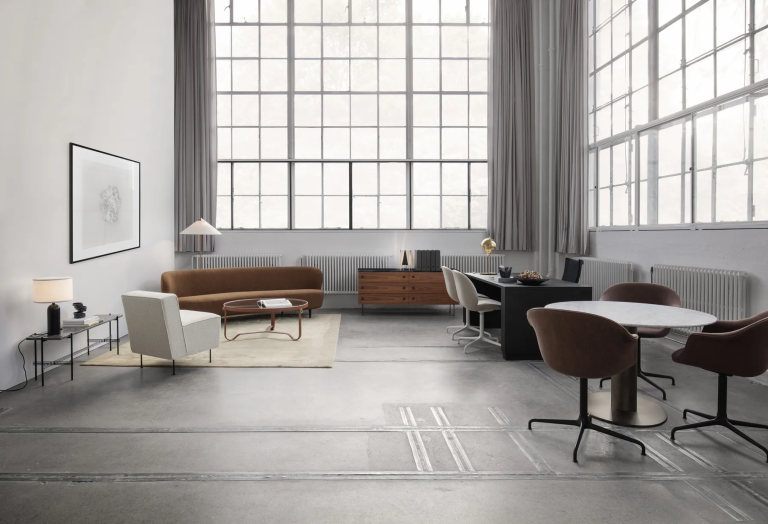
Gubi: Where Scandinavian Heritage Meets Contemporary Glamour
Scandinavian design is usually praised for what it leaves out. Gubi is known for what it puts back in. Where the tradition reaches for restraint,

You touch the dining table on the way to the kettle in the morning. The grain has warmed half a shade since you bought it, and the spot near the window has lifted to a deeper amber than the rest of the surface. This is what solid wood furniture does in a home. It keeps a quiet record of where the light falls and how much time has passed.
For most homeowners, the wood species behind this slow change is encountered as a label. Walnut is dark, oak is light. The decision often stops there, but it shouldn’t. Instead, understand how wood works, ages, and beautifies the home.
Different timbers are not interchangeable shades of the same material. They differ in density, grain structure, natural colour, and how they take a finish. Each species also responds differently to Singapore’s climate, which is part of why luxury furniture designers select wood as deliberately as they select form.
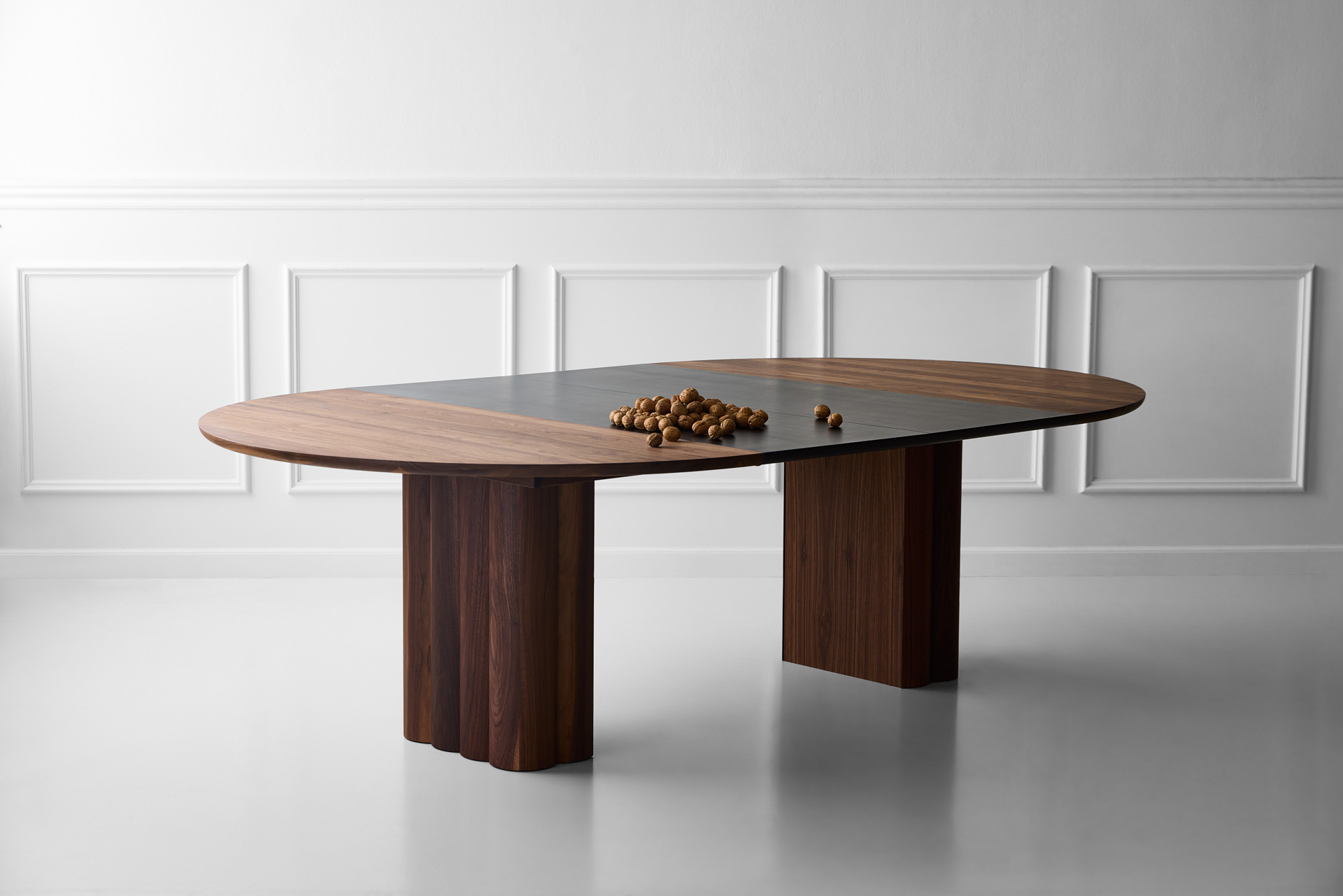
Oak is the most widely used timber in Scandinavian furniture, and for good reason. It is exceptionally hard, dimensionally stable, and carries a pronounced medullary ray pattern that becomes more characterful with age. Its natural colour ranges from pale honey to warm amber, and the same plank reads differently depending on whether it is finished in oil, soap, white oil, smoked, or black-stained.
The Plush Table by DK3, designed by Jacob Plejdrup, illustrates the species well. Generous, sculptural proportions and a softly curved tabletop celebrate the grain rather than hide it, creating a powerful yet balanced whole for the dining room.
Walnut is denser and harder than oak, with a naturally chocolate-brown colour and a fine, straight grain that gives furniture a composure no other species quite matches. It requires no staining, and as the light lands on it through the years, it shifts toward a refined golden-brown.
The Tavolo a Dischi Table by Gabriella Crespi is walnut at its most considered: a walnut veneer top resting on a sculptural base of stacked FSC-certified birch plywood discs around a concealed metal core, finished with a burnished brass-toned steel band at the foot. A designer dining table where the material does as much of the work as the form.
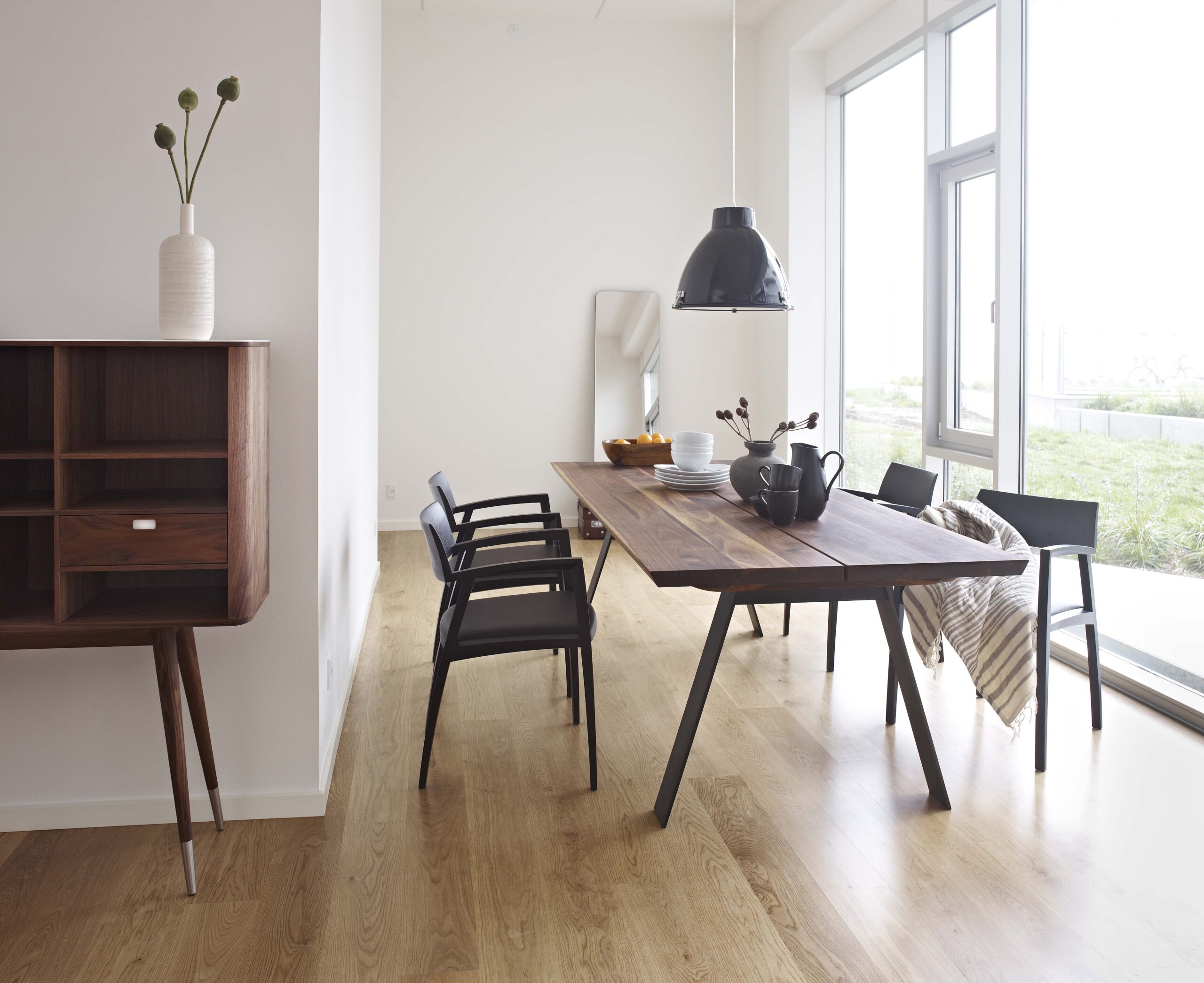
Ash is closer to white-blonde than the honey of oak, with a clean, straight grain that produces a quiet visual lightness. It is also one of the hardest European timbers, historically chosen for tool handles and sports equipment for its flexibility and shock resistance. Those properties translate directly into furniture longevity.
The Plank Extendable Dining Table is a useful illustration. A pale, fine-grained single plank holds the stage, flanked by slim black powder-coated steel legs. The structure recedes on purpose. When the legs are this restrained, the wood becomes the dominant element in the room, and because ash carries its character through fine, even grain rather than figured drama, the result is presence without weight.
Elm is the most visually distinctive of the four. Its interlocking grain produces swirling, figure-rich surfaces with burls and cathedral patterns that no two pieces share. Historically one of the most prized European timbers for furniture and joinery, elm became scarce after Dutch elm disease reduced supply through the twentieth century, which makes well-sourced elm a considered material choice today.
The GM 4107 Tiger Barstool earns its name from the dark “tiger stripes” in the grain, and shows what is possible in the wider category of luxury dining chairs and counter seating when the material is allowed to lead.
A short guide:
In Singapore’s climate, all four species perform well with consistent indoor humidity, kept away from prolonged direct sunlight and air-conditioning airflow.
Wood resists meaningful comparison on a screen. The depth of walnut in afternoon light, the grain of elm under your hand, and the difference between oiled and soaped oak are qualities that need to be seen and touched.
Visit the Danish Design Co showroom in Pasir Panjang to compare finishes side by side, ask about behaviour in Singapore conditions, and make a material choice with confidence. Browse the wider luxury furniture in Singapore collection online, or step into the showroom.
Scandinavian design is usually praised for what it leaves out. Gubi is known for what it puts back in. Where the tradition reaches for restraint,
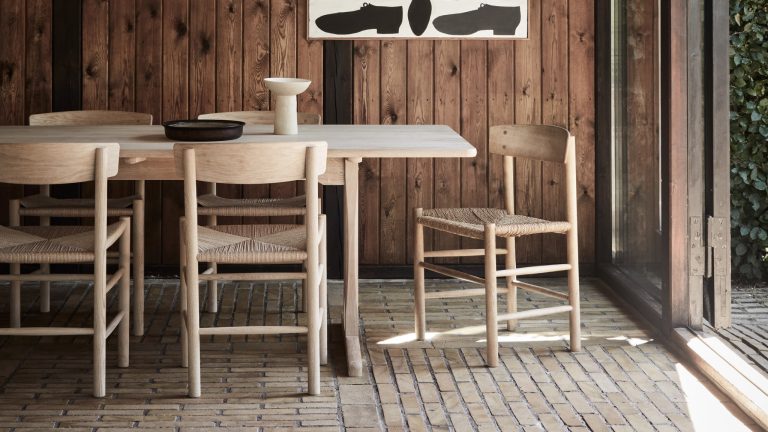
Some furniture houses chase the look of the moment. Fredericia has spent over a century doing the opposite. The Danish house is known for pieces