
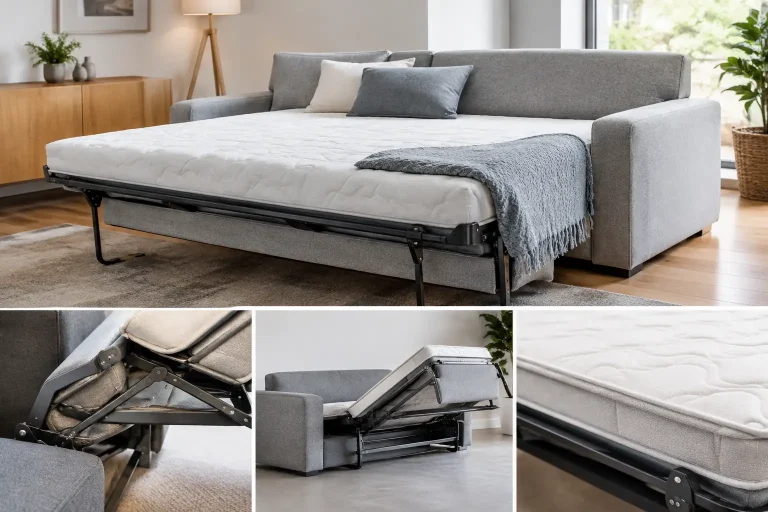
Sofa Bed Mechanisms and Comfort Explained
Learn how sofa bed mechanisms and comfort work together, from sleeping support to daily use, so you can select a refined guest bed for a considered home.
A guest room that sits empty for most of the year is rarely the best use of square footage. For homeowners considering sofa beds Singapore residences can genuinely live with, the question is not simply where visitors will sleep. It is how a room can remain composed, comfortable, and useful on an ordinary Tuesday, then become a proper place to rest when family or friends stay over.
That distinction separates a considered sofa bed from a temporary compromise. The best examples retain clarity of form as seating, open without turning the room into a logistical exercise, and offer the support expected of a real bed. In compact condominiums, studies, secondary lounges, and multipurpose rooms, this balance is particularly valuable.
A sofa bed is asked to perform two demanding roles. As a sofa, it must have the right seat depth, back support, and visual proportion for daily use. As a bed, it needs a sleeping surface that does not feel like an afterthought. Many designs achieve one of these aims. Fewer resolve both with conviction.
Start with the silhouette. A visually heavy piece can dominate a room before it is even opened, while an overly slight design may lack the relaxed comfort expected in a lounge setting. Look for a profile that suits the architecture around it: generous enough for a family room, restrained enough for a study, and sufficiently composed to sit alongside finely made wood furniture, rugs, and lighting.
Then consider the transformation itself. A well-designed mechanism should feel legible and controlled, rather than requiring force or an elaborate sequence. This matters not only for occasional guests but also for the person who will make the bed, return it to sofa mode, and live around it every day. A sofa bed should bring flexibility to a home, not another household task to manage.
The sleeping experience deserves equal scrutiny. Ask whether the mattress construction, dimensions when open, and support system suit the guests you expect to host. A design used for one or two nights each month has different demands from one that serves as a regular bed in a compact apartment. There is no universal answer, but there should be a clear match between the product and the rhythm of the home.
It is tempting to assess a sofa bed only when opened. In practice, it will spend most of its life closed. Measure it as a sofa first: its overall width, depth, circulation around the arms, and relationship to the room’s focal points. A sofa that technically fits can still make a space feel constrained if it interrupts passage to a window, cabinet, or balcony.
Next, map the open position on the floor. Leave enough clearance to extend the bed without moving every surrounding piece, and consider where a guest will place a bag, reach a reading light, or set down a glass of water. In a study, this may mean selecting a more compact form and placing it along the longest uninterrupted wall. In a family room, it may mean ensuring the open bed does not block the route to a powder room.
This planning also affects the character of the room. A home office with a sofa bed need not announce itself as a guest room. A poised, low-profile model can read as lounge seating alongside a desk, shelving, and a considered lamp. When needed, it becomes private accommodation without requiring a separate room devoted solely to infrequent use.
For a couple furnishing a city apartment, the sofa function may be the priority: reading, watching films, or hosting a small group before dinner. For a household with visiting parents or adult children, sleeping comfort may take precedence. Designers specifying a hospitality suite may need both a refined visual language and dependable repeat use.
These priorities shape the right choice. A deeper, more relaxed seat can be ideal in a media room but may be too informal for a study. Arms can add the familiar comfort of a conventional sofa, while an armless profile often gives a compact room more visual air. The right answer is proportionate to the room and honest about how the piece will be used.
The quality of a sofa bed becomes most evident in its structure and moving parts. Upholstery and form are immediately visible, but the internal frame, hinge points, and support system determine whether the piece remains reliable through years of opening, closing, sitting, and sleeping.
This is why established European makers remain relevant in a category often treated as purely functional. Their experience lies in resolving engineering and domestic comfort within a coherent design language. The result is furniture that can belong in a carefully furnished living room rather than being tolerated until guests leave.
Innovation Living sofa beds are European-made and carry a five-year warranty, giving buyers meaningful reassurance in a category where mechanical durability matters. The collection demonstrates how adaptable furniture can retain a calm Scandinavian sensibility: useful without looking provisional, and contemporary without relying on short-lived visual gestures.
At Danish Design Co, models such as Malloy, CozyPad Sofa Bed with Arms, Mikunjo, and Killian offer distinct approaches to comfort and proportion. Seeing them in person is useful because photographs cannot fully communicate seat resilience, back support, upholstery texture, or how intuitively a mechanism operates. These are tactile decisions, best made with time to sit, open, close, and compare.
Fabric selection changes both the appearance and the longevity of a sofa bed. In a bright room, texture can bring depth without introducing visual noise. In a quieter interior, a more tailored weave may reinforce the architectural restraint of the setting. Neutral shades are often enduring, but neutral does not have to mean flat. The right fabric can hold light beautifully while giving the piece a quiet sense of presence.
Practicality matters as well. Consider how often the sofa will be used, whether it sits near a dining area or window, and who will occupy it. A guest-room sofa bed may see limited daily wear but needs to remain welcoming over time. A living-room model will be exposed to more frequent use and may benefit from a textile that feels substantial and forgiving.
Avoid choosing fabric in isolation. Compare it against flooring, wall color, timber finishes, and nearby upholstery. A sofa bed is often placed in a room with more than one purpose, so it should create continuity rather than become a separate visual event. This is where Scandinavian design is especially persuasive: its best forms are calm enough to work within changing interiors, yet precise enough to make the room feel resolved.
Online research can narrow the field, but a sofa bed is not an object to choose on dimensions alone. Sit in the corner seat. Notice the angle of the back. Open the mechanism yourself. Lie down for longer than a moment. The questions are straightforward: Does it support the way you rest? Does it feel proportionate when closed? Can you imagine maintaining the room around it with ease?
For architects and interior designers, a showroom visit also allows a more informed conversation about scale, textile direction, and placement within the broader scheme. A sofa bed may be one item in a larger project, but its dual function means it often has an outsized effect on how a room performs.
A well-chosen sofa bed is not merely an answer to overnight guests. It is an investment in a home that can adapt gracefully, preserving comfort and understated elegance even as its needs change. Download the sofa bed catalogue from the dedicated sofa bed page, or request it on WhatsApp, then test the models at the showroom at 100E Pasir Panjang Road, #06-03.
Learn how sofa bed mechanisms and comfort work together, from sleeping support to daily use, so you can select a refined guest bed for a considered home.

Designer office furniture brings clarity, comfort, and enduring character to focused workspaces, from private studies to considered shared offices alike.
Explore 20+ sofas, 30+ tables, and 50+ chairs in our 12,000 sq ft showroom, along with a wide selection of designer furniture. Experience quality firsthand and discover the stories behind each piece—it’s a visit truly worth your time.