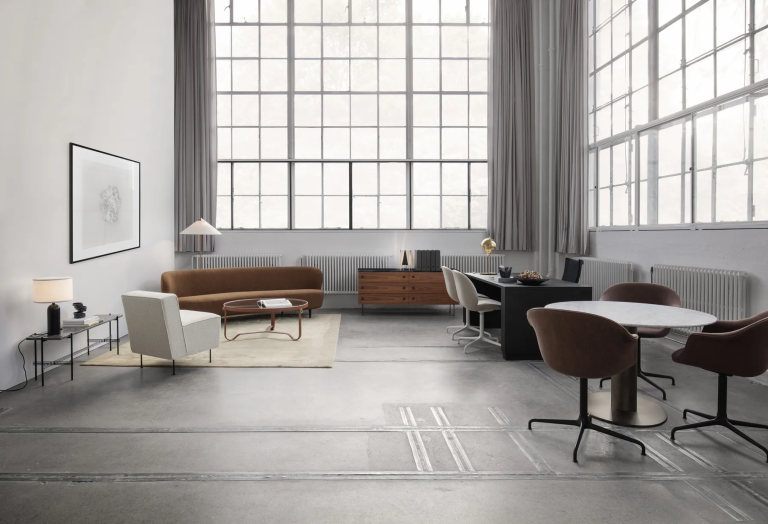
Gubi: Where Scandinavian Heritage Meets Contemporary Glamour
Scandinavian design is usually praised for what it leaves out. Gubi is known for what it puts back in. Where the tradition reaches for restraint,

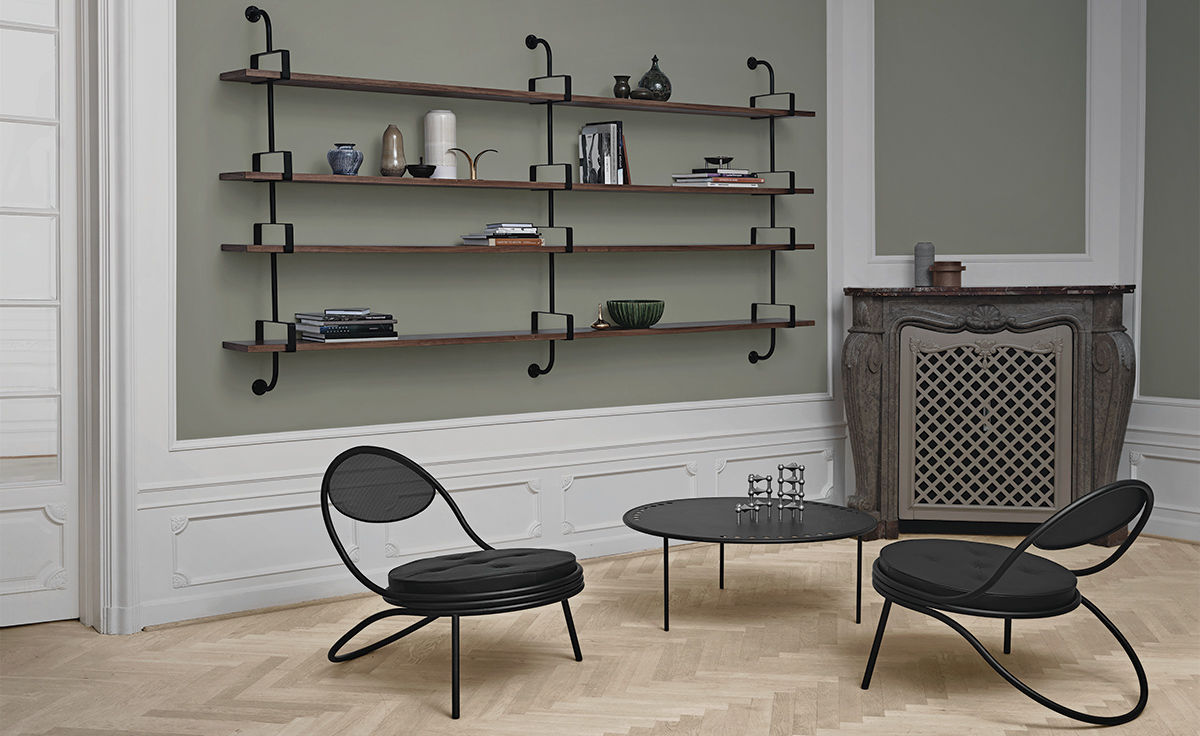
Light passes through a Mathieu Matégot chair before it reaches the floor. The seat and back are made from a perforated metal sheet that casts a fine pattern of shadow across the surface beneath, and the silhouette of the frame reads as a single drawn line rather than an assembly of parts. The piece sits in a room without occupying it the way most metal furniture does.
This is the problem Matégot spent a career solving. Most metal furniture is heavy in at least one sense. It looks hard, it reads as cold, and it announces its material loudly. Matégot understood metal as something that could be perforated, bent, and shaped until it felt closer to lace than to steel.
Born in Hungary in 1910, Mathieu Matégot studied at the Budapest School of Art and Architecture before moving to Paris in 1931, the city that defined the rest of his working life. When France entered the war in 1939, he joined the French army and was taken prisoner in Germany, where he remained until his escape in 1944.
The captivity was formative rather than interruptive. Working with limited materials and industrial constraints, he began experimenting with metal’s properties, eventually developing his signature technique. He returned to Paris and opened his own production company, Société Matégot, in the early 1950s. The pieces for which he is now remembered came from that decade.
In 1953, Matégot patented a fabrication technique he called Rigitulle. It combined tubular steel with perforated sheet metal in a way nothing else in post-war European furniture did. The perforation removed mass without removing structure, and the combination allowed the resulting surface to be bent, curved, and folded with a flexibility closer to fabric than to metal.
Two consequences followed. The first was visual: surfaces that allowed light to pass through them, casting intricate shadows and reading as airy rather than solid. The second was formal: the freedom to draw furniture in a single continuous line. Many Matégot pieces, particularly the chairs, look as if the frame moves in one gesture from leg to seat to back, without visible joints or interruptions. The silhouette reads as a drawing in space.
This matters as a design conviction. For Matégot, material intelligence was not a technical matter separate from aesthetics. It was the source of the aesthetic. His forms grew from what Rigitulle could do, not from a shape imposed on an available material.
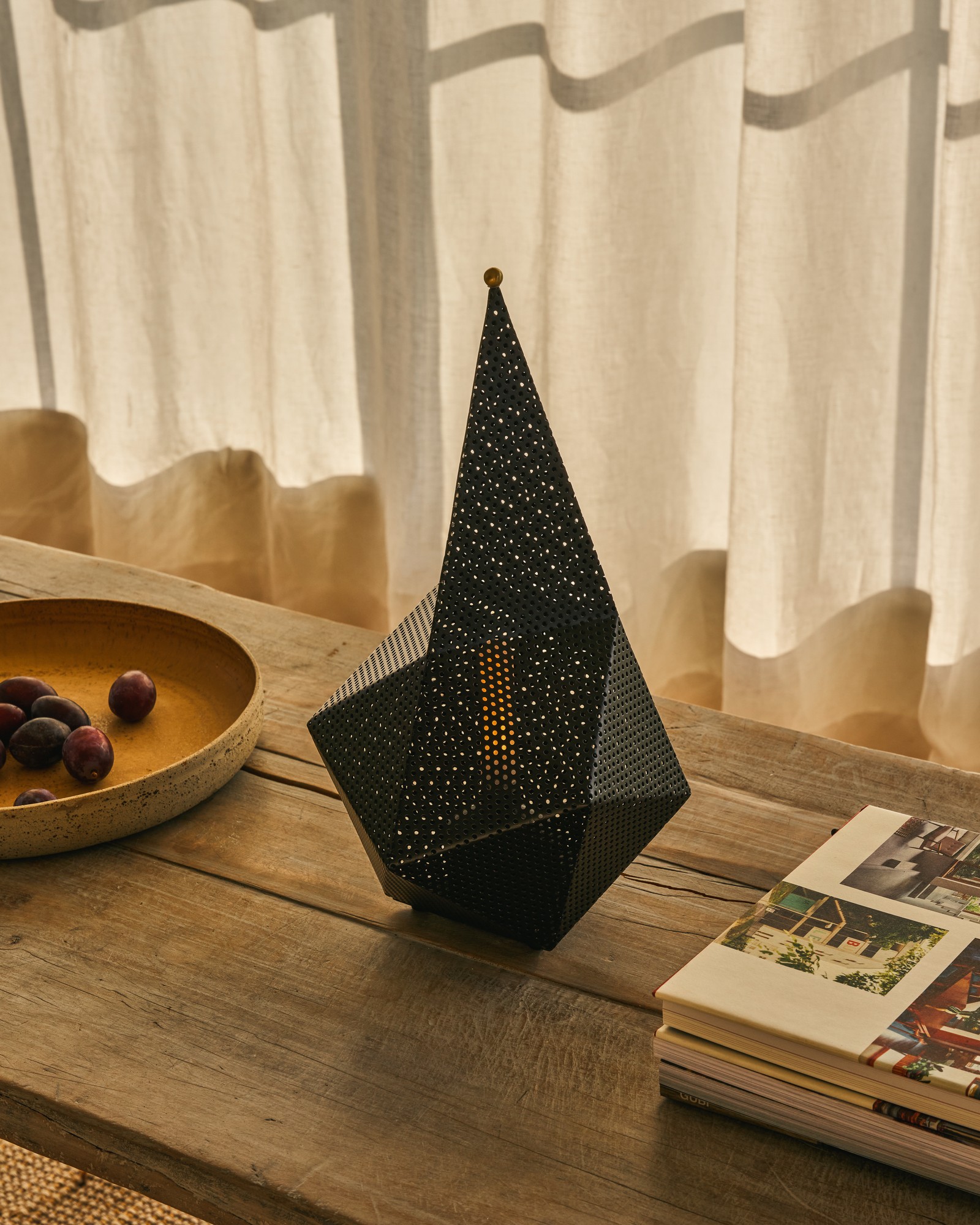
An influential Scandinavian design house known for safeguarding iconic furniture designs and fostering new talent, Gubi holds the rights to Matégot’s pieces and produces them as working furniture for daily use. This is why they are available through Danish Design Co.
Matégot’s work resonates in Singapore residential interiors for specific reasons. The use of perforation and negative space gives the pieces a visual lightness that holds up well in compact condo layouts where solid furniture quickly crowds the floor plan, while the use of metal is perfect for outdoor furniture.
A Matégot piece is sharp and graphic, working as a counterpoint to softer furnishings. One Copacabana in a room otherwise furnished in warm woods with a soft rug creates a tension that makes both elements more interesting.
Rigitulle is a material that product photographs approximate but do not capture. The shadow patterns, the visual weightlessness, and the way the perforation behaves in real light all need to be seen in three dimensions.
Visit the Danish Design Co showroom in Pasir Panjang to see the Copacabana and Bagdad in person, or browse European furniture in Singapore online.
Scandinavian design is usually praised for what it leaves out. Gubi is known for what it puts back in. Where the tradition reaches for restraint,
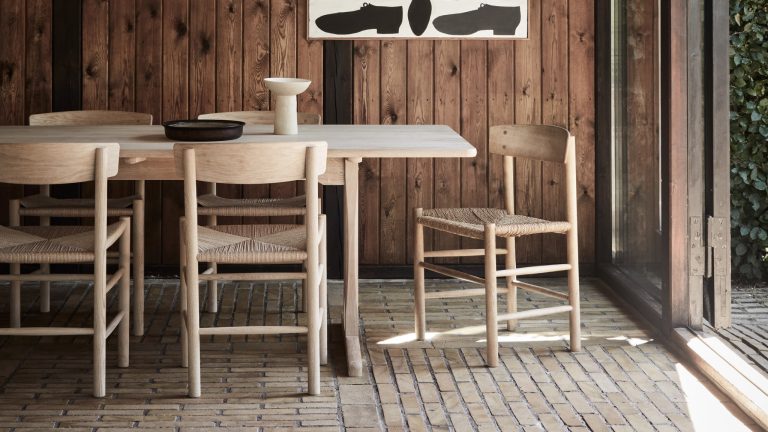
Some furniture houses chase the look of the moment. Fredericia has spent over a century doing the opposite. The Danish house is known for pieces